

ONE NEW MAN:
JEW AND GENTILE,
AND THE WORLD TO COME
God’s promise to Abraham was never for Israel alone. “In your seed all the nations of the earth shall be blessed” (Genesis 22:18) — a blessing to the nations, spoken in the same breath as the covenant that made Israel a people. What the Sages and the Prophets both describe is not Israel being set aside to make room for others, but others being brought in alongside Israel, without either ceasing to be who they are.

GRAFTED IN, NOT REPLACED
The Talmud preserves a striking rabbinic reading of exactly this promise. Rabbi Elazar, a first-century Sanhedrin Nasi, asked what Genesis 12:3 — “in you shall all the families of the earth be blessed” — actually meant, and answered with a picture of grafting: God had “two good shoots to graft” onto Abraham — Ruth the Moabite, ancestress of David’s house, and Naamah the Ammonite, ancestress of Solomon’s line (Talmud, Yevamot 63a). Two women from nations Israel was forbidden to intermarry with (Deuteronomy 23:3–4) became, by God’s own design, part of the ancestral line of King David — and of Messiah. Rabbi Elazar’s own word for it was “grafted” — the same image the Apostle Paul later used to describe the nations coming to faith in Israel’s God: branches from a wild olive grafted into the cultivated one, warned specifically not to boast against the root, since “you do not support the root, but the root supports you” (Romans 11:17–18). Two Jewish teachers, a generation apart, reached for the same picture.

TWO STICKS, ONE HAND
Ezekiel was told to take two sticks — one for Judah, one for Joseph and the house of Israel — and join them into one stick in his hand, as a sign that God would one day make the divided house of Israel one nation again under one king: “David My servant shall be king over them, and they shall all have one shepherd” (Ezekiel 37:15–24). This is the same “one shepherd” and the same Davidic king discussed elsewhere in this study as Messiah ben David — and it is worth noticing that Ezekiel’s picture of unity begins inside Israel itself, between Judah and Joseph, before it ever extends outward to the nations grafted in alongside them.
A COVENANT MADE WITH THE SAME HOUSE
Jeremiah is explicit about who the promised new covenant is made with — not a new people replacing the old, but the same house that stood at Sinai: “Behold, the days come, saith the LORD, that I will make a new covenant with the house of Israel, and with the house of Judah” (Jeremiah 31:31). Whatever this covenant does for the nations grafted in, it does not do by erasing the house it was made with in the first place.
WHAT YESHUA’S FOLLOWERS BELIEVED THIS MEANT
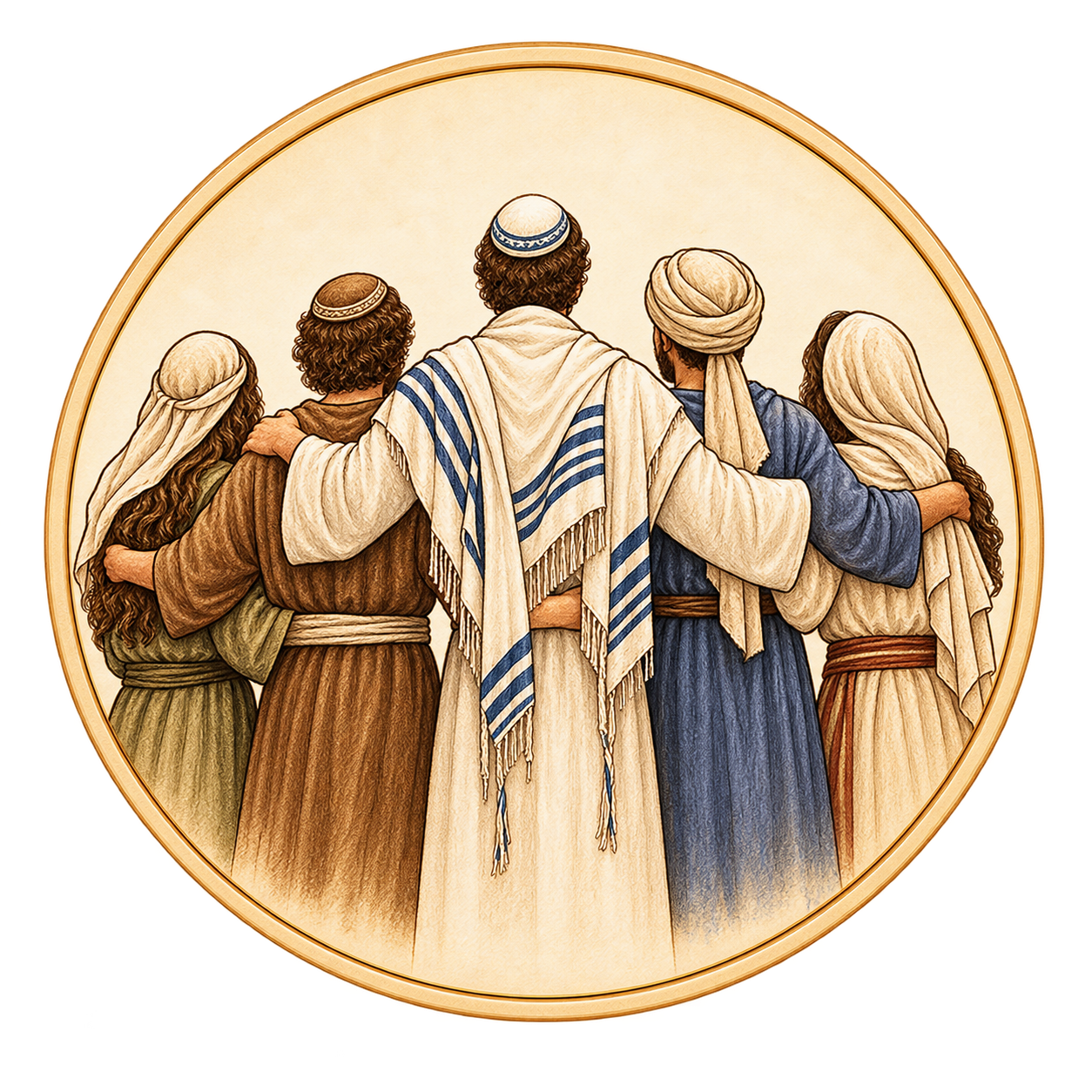
Paul, writing to a mixed community of Jews and the nations who had come to faith in Israel’s Messiah, described them as no longer strangers but built together — “one new man” — without either party losing its identity in the process (Ephesians 2:14–15). This is the same picture Rabbi Elazar saw in Ruth and Naamah centuries of rabbinic memory earlier: the nations blessed by being joined to Israel’s story, not by replacing it.
THE SHARED HOPE: THE WORLD TO COME
All of this points toward what the Sages call Olam Ha’Ba — the World to Come. It is where the resurrection hope discussed elsewhere in this study lands: the Messianic Era fully arrived, David’s greater Son reigning from Jerusalem, Judah and Joseph one stick in His hand, and the nations who have been grafted in standing alongside, not instead of, the people through whom the blessing first came.

WHERE THIS LEAVES US
The hope of Messiah was never a hope for Israel to be traded away for someone else’s story. It was always a hope big enough to include the nations without ever requiring Israel to disappear. Ruth and Naamah were grafted in. Judah and Joseph become one stick. The new covenant is still made with the house of Israel and the house of Judah. Yeshua’s followers, from the very beginning, understood themselves to be joining that same story — not writing a different one.